An Interview with Jason Costa
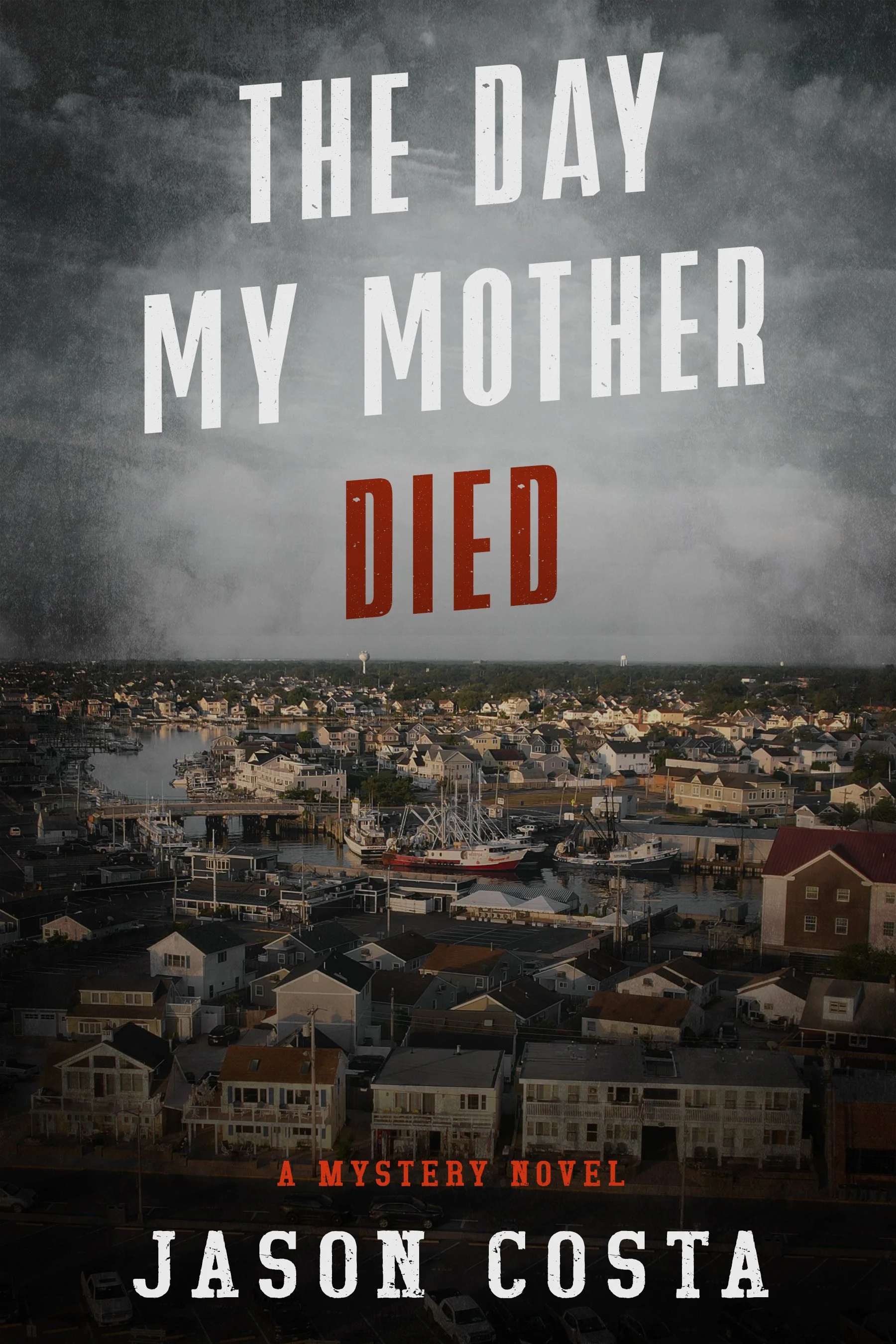
Your work is often compared to James Lee Burke and Dennis Lehane. How do you balance the 'puzzle' aspect of a murder mystery with the 'prose-heavy' requirements of literary fiction?
For me, the prose-heavy aspect comes from the narrator’s voice. That’s why I love James Lee Burke books, Dave Robicheaux’s voice. I also love Adrian McKinty’s Sean Duffy series, again an amazing voice. Tana French also writes with an incredible voice though in a very different way. The thing that’s important from my perspective is that new stories don’t really exist. All plots have been written, but not all voices have been heard. So that’s why I come back again and again to writers whose voices I love. When that’s the focus, finding the balance isn’t hard because they’re intertwined.
Coastal Noir is a very specific subgenre. How did you go about capturing the specific 'voice' of the Jersey Shore—the sounds, the smells of salt spray, and the unique tension of a tourist town in the off-season?
Growing up on the Jersey Shore is an essential part of this. I find it difficult to write atmospherically about a place I haven’t lived, and my formative years were spent at the Jersey Shore, so I have a special connection to the area and to the ocean. I was literally born across the street from the Atlantic Ocean. A couple of years ago, I read Dogs of Winter by Kem Nunn. I would consider that coastal noir but of a different ocean. He was writing about Northern California surf culture. The story arose from the geography. The Day My Mother Died also arose from the geography. The plot fits with the small town balance between respectability and New Jersey’s particular criminal aspects. As far as the specific aspects, the description of the destruction wrought by Hurricane Sandy took care of that for me.
You’ve described the wreckage of Hurricane Sandy as more than just a backdrop—it’s a catalyst for the plot. Why was it important to set Jimmy’s return against a landscape that was physically and metaphorically 'unearthing' its secrets?
The genesis of the book was a ride I took with my childhood best friend in the aftermath of Hurricane Sandy. I haven’t lived in New Jersey since I was eighteen, so I had to go back to see the destruction. I was there maybe a month or so after the storm, and even then, the devastation was overwhelming. The area of Manasquan near the pier was reminiscent of a zombie movie. Many of the details of that trip with my friend made it directly into the book because the reality was more powerful than anything I could have imagined. As I was processing that, I had the idea of a man returning home where everything is destroyed because destruction creates opportunities. In this case, an opportunity for a grown man to face up to the trauma of his youth.
Reviews have praised your ability to show the 'gray layers' of flawed men. What draws you to characters who aren't traditional heroes, but are instead trying to find footing in their own wreckage?
That’s an excellent question. Faulkner called it the conflict of the heart with itself. I think of it more as the conflict of selfish desire versus societal expectation because that’s where the gray layers are. I think that the vast majority of people are generally who they appear to be, but those also aren’t generally the people that great stories are about. I like writing about people who are flawed more deeply than the average person and then trying to see if their flaws will prevent them from fulfilling their promise. If there’s isn’t a flaw holding a ‘hero’ back then there really isn’t much for a reader to root for. The battle to keep who we present ourselves to be in public versus who we are in private from being exposed is an excellent vector for finding good stories, but a character needs something to hide in the first place.
As a debut novelist, what was the most surprising thing you learned about the character of Jimmy Miller during the writing process? Did he ever take the story in a direction you didn’t plan?
For all the talk about his mother, Jimmy is really tortured by the memories of his father, and he is terrified of being like his father, and a part of him worries that he has no choice but to be. What kind of man Jimmy will be is what the story is really about. I’m not sure that Jimmy really has it figured out by the end of the book or not. Maybe an author isn’t supposed to say that, but it’s true from my perspective. I guess we’ll see in book 2.