An Interview with AM Pascarella
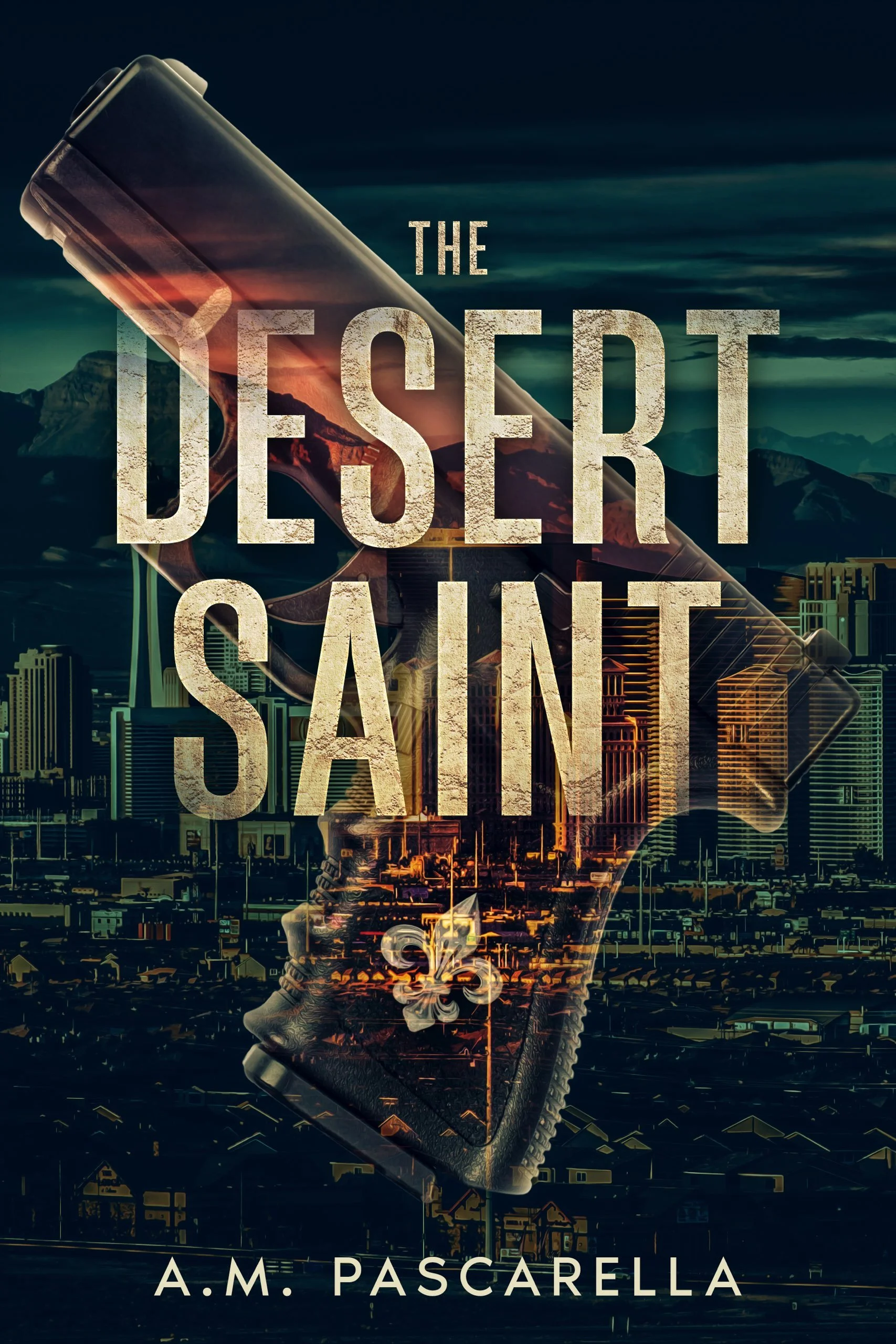
Vegas is practically a character in this book. Why did you choose the 1980s "Neon Era" as the backdrop for the Desert Saint’s original crimes?
I chose the Neon era partially for plot reasons, the years lined up with Dominic being a young man at that time. Also, serial killers were much more prevalent back then in a world without cameras. And the vegas of the 80s was a mob vegas, not the sanitized overpriced corporate vegas of today. So I wanted to add that flavor to the book.
Maria is a legacy detective living in her father’s shadow. What makes her approach to the "Desert Saint" case different from the way a "Las Vegas legend" like her father would have handled it?
Maria doesn’t view herself in competition with her father. Dominic was never domineering in that way, and much of her approach is based on what her father has taught, using interviews as a way of understanding her targets and through that understanding, seeing hidden motivations and unearthing lies. So Dominic would have gone about trying to solve the case in much the same way. Maria has some forensic advances that her father never had, and because she was raised by an accomplished detective for a father who was also loving, she doesn’t have Dominic’s blind spots.
With over 1,000 reviews, many readers are calling the reveal of the Saint’s identity "mind-blowing." Without spoilers, how do you approach planting clues for a twist that feels both shocking and inevitable?
A clue has to be naturally placed so it fits with the story and doesn’t stick out. But the clue can’t be completely understood at the moment it appears because the revelation has to come later, and the revelation has to come in such a way that the detective sees it but the reader doesn’t.
What was the most surprising thing you discovered about the history of Las Vegas or the Mojave Desert while researching for this book?
One of the Dominic flashbacks involves him being ordered by a superior to round up all of the streetwalking prostitutes that he can find in a paddywagon and to drive them to California and to leave them on the side of the road. Dominic’s creative refusal is probably the best anecdote that shows his character in the book, but what most readers don’t know is that this was something that actually happened in the 1980s in Las Vegas, a story that was told to me by a now long-dead Las Vegas bar/nightclub owner.