An Interview with Jason Costa
Colombia is often presented to American audiences primarily through stories about Pablo Escobar and the drug trade. Your novel reaches beyond that familiar narrative to examine a much longer history of political conflict. What did you want readers to understand about Colombia that they might not encounter in more conventional crime fiction?
Hopefully they’ll learn about how complicated the history of Colombia is. Most American audiences are only concerned with issues that affect the United States, which is why the cocaine trade is such an area of interest. The Colombians weren’t doing cocaine, we were. Colombia just suffered the consequences of our addictions, but the history of Colombia had a period called La Violencia, and one section of the book is focused on the beginning of that time. Much of the research I did, much of the Colombian books that I read were focused on that period.
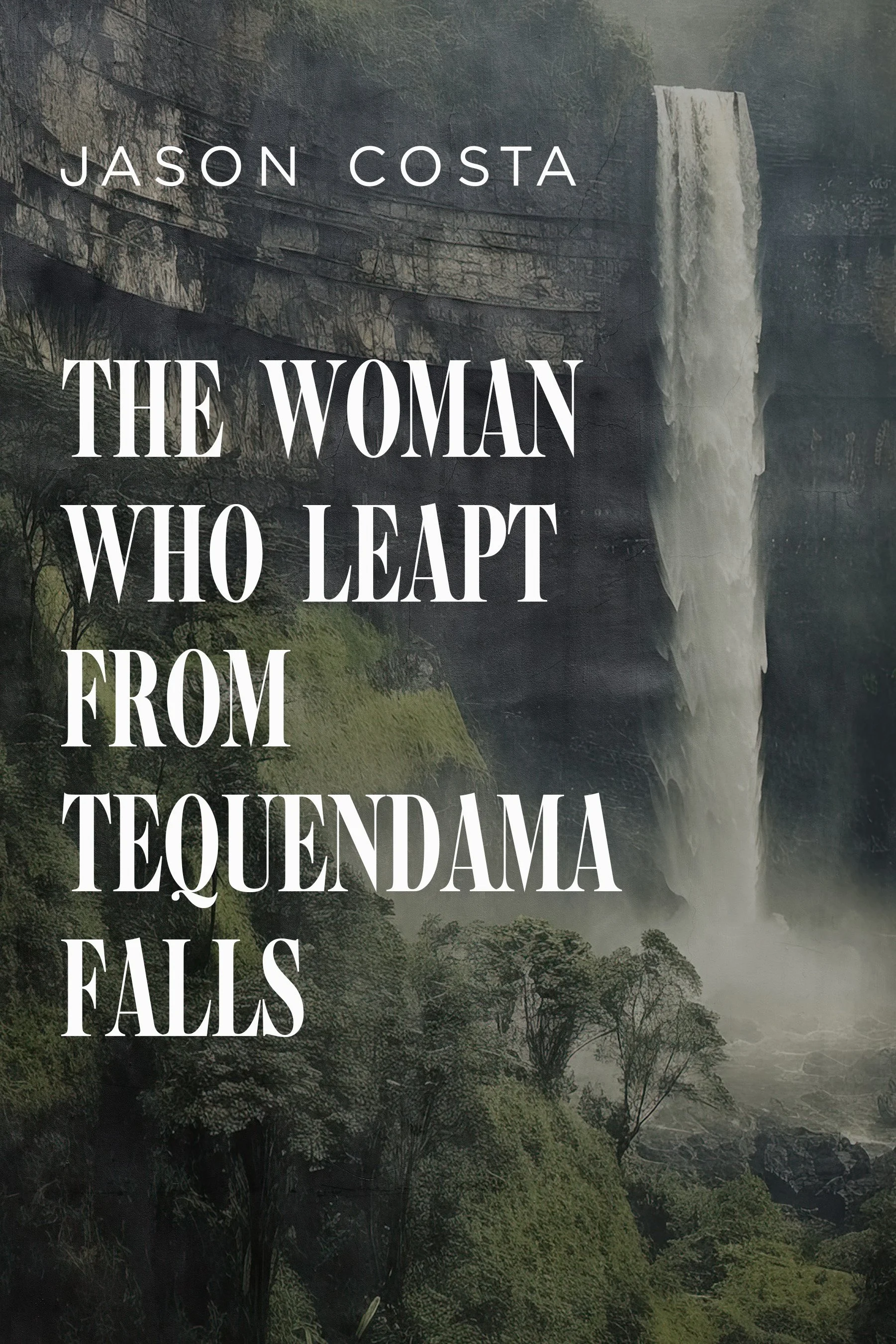
What was the original inspiration for The Woman Who Leapt from Tequendama Falls? Did the story begin with a character, a historical event, a place, or an idea?
I’ve spent a lot of time in Colombia over the last fifteen years, and in one of those trips, I went to Tequendama Falls. Getting there wasn’t easy but the trip was worth it. I walked out to the edge of the falls and it was intense.
The publisher describes the book as a story about how violence is inherited. What does inheritance mean in this context? Is violence passed down through family relationships, political institutions, cultural narratives, or some combination of these?
All of the above. Violence seems to be endemic to human nature. It’s the one thing that truly binds us, a deep seated aspect of our innate tribalism. There is nothing human beings can’t convince themselves of if it is necessary to maintain their attachment to their tribe. Our families, our political parties, and our cultures are just signifiers of the groups that we belong to, and human beings love to fight for the honor of those groups. And this book finds much of the motivation for violence inside those connections, but what I think is really exposed is that much of the “group identity” is really just a cover for human ambition.
The novel brings together personal betrayals and larger political conflicts. What interests you about the relationship between private lives and historical forces?
Aren’t our private lives shaped by historical forces? I think when someone really learns history, really dives into it, the fragility of society becomes very clear. I’ve been pretty lucky to live in the United States. I was born in 1975, so while my formative years were during the highest crime decades, still, crime waves don’t hit the way civil war does. A mugger can be avoided. A mob setting fire to your home, not so easy to avoid that one.
Joseph initially pursues the “Great Story” as a means of advancing his career. How did you develop his character, and what did you want his journey from ambition toward a more personal sense of purpose to look like?
Joseph’s role in the book isn’t really about how he changes for the better. Instead, it’s more about the realizations that he makes about how his ambition and pride are the cause of much destruction, perhaps unintentionally, but still he ends up being the genesis of a lot of pain, and does it really matter whether it’s intentional or not? The book in some ways is about how long it takes him to realize his role in the disasters of the story.
The novel weaves together three apparently disconnected lives across four decades. At what point in the writing process did you understand how their stories would connect? Did you begin with a structural plan, or did the connections emerge as you wrote?
I struggled with this aspect perhaps more than any other. I tried different formats and structures and orders of chapters. Ultimately, I decided to tell the stories one by one, though the end of Joseph’s story kind of straddles the Old Man’s Tale and Our Sandrita. Essentially, the telling of those stories allows the ending to occur. I didn’t understand how they would connect until the end of the writing process. It was one of the last things I decided on before publishing. As per connections, that came from the plotting and incorporating the history of Colombia.
The publisher positions the novel as a literary thriller, combining literary craftsmanship with a suspenseful plot. How do you understand that distinction? When you're writing, do you think of yourself primarily as a novelist, a storyteller, or a writer working between genres?
I don’t think about labels at all. I just have a story I want to tell and I’m trying to figure out how to tell it in a way that the reader will hopefully like. I will say that this book was a titanic undertaking. It took me a decade to write it. It came in fits and starts but more than anything else, it was important to me to get it right. At least as right as I could. But I never planned on it being much of a seller. Sure, I hoped that readers would like it, but it’s not the type of book that lends itself to commercial success. It was definitely more of a personal project.
The novel asks, in different ways, what happens when the stories people believe about their past turn out to be incomplete or untrue. Do you think discovering the truth necessarily brings justice or redemption?
No, I don’t. But it might bring a little bit of peace.
What are you working on now, and will your next novel continue to explore the relationship between individual lives and larger historical forces?
I’m working on the next Jimmy Miller novel which will be set in Italy around the time when the last pope was chosen. Hopefully it’ll be out in late 2027